
I love walnut bread, but at £1.19 for a small loaf it’s pretty expensive and I therefore have to ensure that when I do splurge I use every morsel….and because it’s yummy and I can’t bear to leave a crumb!
1. Simply sliced and eaten with quality butter, I like Lurpack.
2. Toasted with a little quality cheese.
3. Blended and used as breadcrumbs to top pies/pasta bakes.
4. Chopped chunky and dipped in olive oil and balsamic (I like raspberry vinegar too.)
5. Sliced and used for an open sandwhich.
6. Cubed, doused in olive oil and baked. Use these croutons in a nice salad, I like chicken and bacon salad or a simple green salad with parmesan and pine nuts.
7. Cubed and doused in olive oil with a slug of balsamic, bake, then plop into a nice bowl of tomato soup.
ACF stands for America’s Cheapest Family by the way, it’s a book I bought last year after it was given a positive review at The Simple Dollar. The book covers all aspect of saving money and spending wisely, one of the biggest takeaways though has been their budgeting system.
Like most people (I think?) I used to muddle along and as long as my bank balance was ‘in the black’ I thought I was doing just fine, until of course the car broke down and we hadn’t accounted for the unseen cost of repair, which is where it all starts to get complicated and stressful if you don’t have savings. The ACF budgeting system takes into account these seemingly ‘unseen’ costs and factors them into a budgeting system that is easy to use and provides piece of mind that when something unexpected happens the funds are there to take care of it. Sound good?
I manage my budgeting system in a (very) simple spreadsheet (no formula required! Unless you want to). Along the top I have all the categories in which we spend money, ie insurance, clothing, car, mortgage, food etc.. I take the projected annual cost of each category and divide by 52. The amount left is the amount I must put into that category or ‘account’ each week, we are paid weekly, you may choose to do this part monthly. The projection is easy to figure out if it’s a monthly direct debit I times by 12 then divide by 52. If it’s something more difficult like the car (which includes repair!) I allow for the most expensive car repair we’ve had (£650) and then divide by 52 and hey presto. For household maintenance I allow around 1% annually for the value of our home which is a generally accepted amount ie if my home’s market value is £100,000 then I allow £1000 per year, which sounds about right.
So as we are paid weekly (and this is much easier if you have internet banking), I breakdown the pay into these categories, leftover money is put into a seperate ‘frivolous spending’ account. All bills and spending which is accountable comes out of the first account, I manually minus the money out of the categories each morning. This sounds like a complicated process, but in reality it takes me around five minutes or less each morning.
I’ve been testing this budgeting system for nearly six months and I can honestly say I’ve never worried less about money. I’ve nearly always kept savings for unseen disasters, however, it’s all too easy to spend those savings, not when you’re using this budgeting system, it’s easier to realise that eventually these ‘unseen’ events will happen and that you’re actually just saving up for when they do. Instead of the event being a financial disaster it becomes just another bill, one that you’ve already budgeted for! Now that the routine is in place it’s so simple to manage that I can’t ever see me not doing it now.
How do you manage the household finances?
I’ve been planning the family’s evening (main) meal ever since I first moved out of home at age 17. I’ve found it to be a useful practise that has helped keep our meals fresh, in the interesting sense, and fresh, in the literal sense too, ingredients can be purchased in the correct quantity and stored appropriately ie chicken for a meal later on in the week can be frozen. I always leave one day free which allows for meals out/takeaways or family invitations. If none of the above materialise then we eat leftovers, or from a reserve of ‘freezer food’.
I usually plan several weeks ahead, taking inspiration from magazines, cookery programmes and books that I have. Recently though I’ve been wondering if there are any ways to improve on my current routine.
If you’re a meal planner how do you manage breakfast, lunch and snacks?
04 May
Posted by Little Mummy as Discussions, Uncategorized
There’s been a lot of coverage recently about an impending recession, the american mortgage crisis, and the rising price of food and fuel. Is there anyone who hasn’t given at least a quick thought to their monthly budget and looked for where they could trim some fat? I have, and I’ve also been wondering how I’m doing with my food budget compared to everyone else. This isn’t an opportunity for one upmanship, I’m actually more interested in finding those who are spending less, and how?
Please answer the following questions either on your own blog (and link here, so I can find you) or in the comments.
Here are the questions and my answers.
1.) Predominantly, where do you shop? Tesco
2.) How often do you shop? Weekly
3.) How much (on average) do you spend? £60(this includes household products and nappies)
4.) How many people are you buying for? 2 adults, one infant
5.) Do you do any of the following - meal plan, make a list, have a budget? Yes to all
6.) If at all, how have you tried to lower your spending on food and household items? I started meal planning and buying online to keep my costs down, recently though I have had to increase my budget from £50 to £60 as I was really feeling the squeeze.
Thanks for taking part.
I haven’t done a post for review me for ages, perhaps a year or more - however, this offer really caught my imagination.
It’s basically a website that has collated the information of colleges across America into an easy digestible format for prospective students. Students can study the wealth of information and make comparisons before settling on a shortlist.
You can search for colleges by a number of criteria, including rank, state and size. Each college website offers various other information including the basics such as address and phone number through to the average cost of supplies and selectivity. The site offers a dedicated facility to make college comparisons based on statistical data - this alone would be an invaluable tool.
But there’s more…perhaps the most exciting feature is the student reviews - short video clips of students providing the insider knowledge that can only be gleaned from those in the know, like what the classes are like, where the best bars are, and what the general atmosphere is like. This feature also has a search function, so you can type in anything you like and it will find the most appropriate video clips.
I think LVUTV is invaluable to someone considering their academical future. I’m already wondering if the UK has anything similar, because this is very impressive both in it’s conception and useability.
I’ve been tagged. I’m going to change the rules to suit myself slightly;
a) I’m going to take the first part of mother at large’s answers and complete them myself.
b) I’m going to offer two answers to each, one will be a truthful answer, one will be completely false. I realise this defeats the purpose of the meme, but hey, it might be fun! Here goes…
1. My favourite food is…. Salad
1a. My favourite food is… Seafood
2. I get pleasure from… Cleaning
2a. I get pleasure from… Winning
3. I have a…. Combine harvester (and I’ll give you the key)
3a. I have a… big pile of ironing to do
4. I am NOT…. Lazy
4a. I am NOT… slightly OCD
5. I am looking forwards to… doing the big pile of ironing
5a. I am looking forwards to… improving my poker skills
6. I am already nervous about… the social science degree I’ve just started
6a. I am already nervous about… performing with the local amateur ballet group
I’ll tag anyone who leaves a comment on this post.
Women Work Harder Than Men (and other interesting facts)
Women work two-thirds of the world’s working hours, buy earn only a tenth of the world’s income.
I found this fact to be particularly disturbing, although not really that surprising. There is still huge inequality in the developing world, however, that’s not to say we don’t have our own issues here in Britain, like the inequality of wages. If we are all being fairly remunerated for our efforts then what’s the problem with making the figures public knowledge? Problem solved. Some would argue this would be a breach of privacy, they are probably the same people earning more than they are worth.
Other facts included;
Women produce half the world’s food but own less than 2 per cent of the world’s land.
Domestic violence, where women are predominantly the victims, kills and injures more people in the developing world than war, traffic accidents or cancer.
A third of the world’s women are homeless or live in inadequate housing.
It’s easy to forget that there are huge swathes of the world where women do not enjoy the same level of equality that we currently enjoy in the west.
(Source: OU Social Science Newspaper)
Teachers Stifle Pupils Interest in Current Affairs
Stories like these are appearing more often, perhaps because of the social appetite to criticize our education systems, or maybe it is representative of the actual situation, who knows… There’s always some news piece about children being prevented from going on vacations (educational or not), or taking time out of school to do something other than study within the constraints of four walls. Four walls are not a prerequisite to learning, and neither is a formal teacher for that matter, every man (woman, or child) is capable of being his own teacher. That’s not to say that I don’t hold our teachers in high regard, I do, I just believe that there is more to learning that being taught (within four walls) and we, as a society, are missing a trick not to recognise this. I’ve always felt that a more flexible education system is what is required for the future, a flexible and dynamic education system which will nurture tomorrow’s generation of free thinkers.
I’m upgrading the backend of LittleMummy.Com, so things might look a little squiffy or stop working entirely for a short while. Bear with us.
*Update* - Aaaand we’re back. Still reactivating plugins etc, so there might be some oddness to go, but the database is upgraded and everything seems to be working fine.
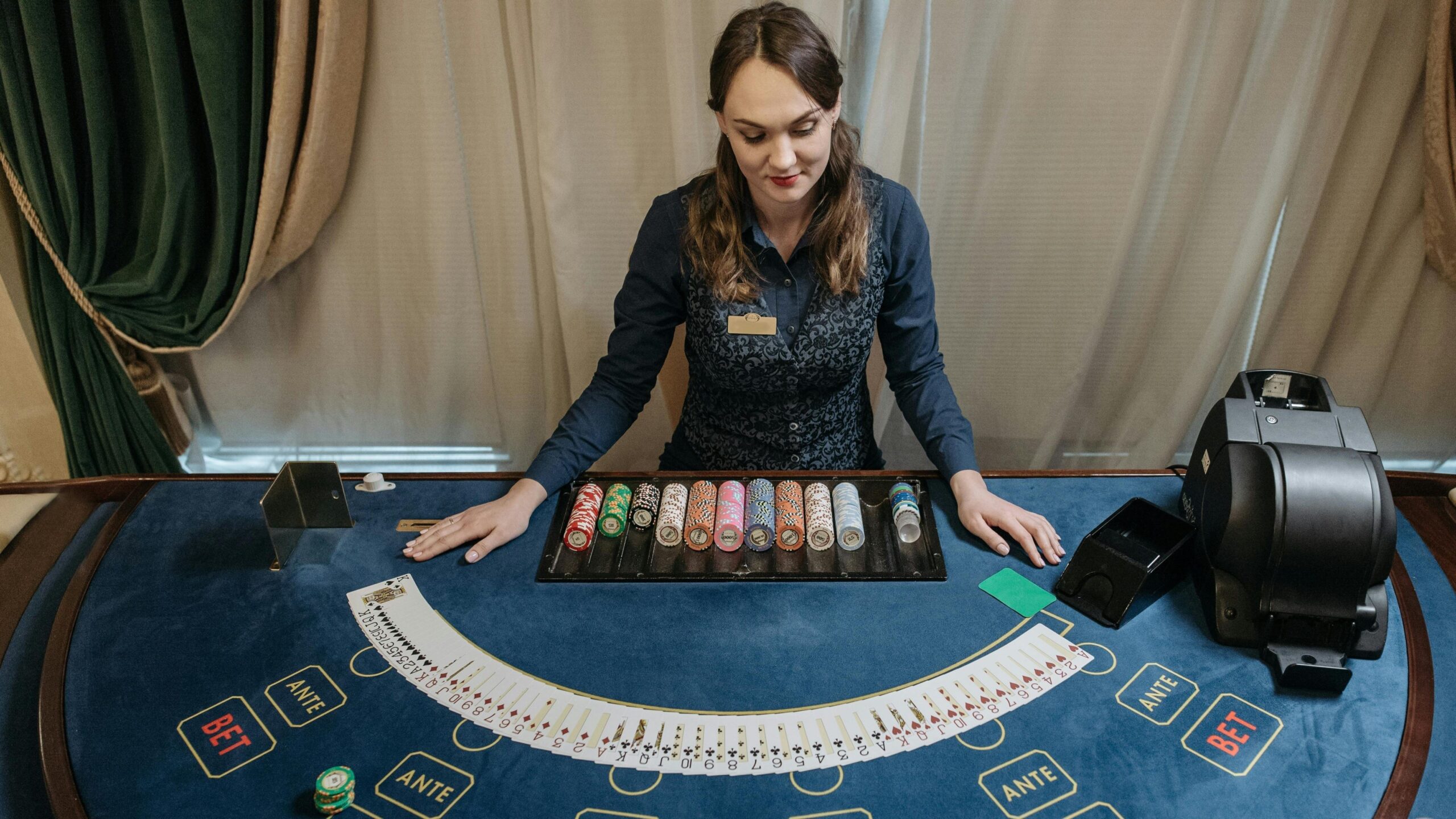
My brother taught me to play poker about two years ago during a home tournament with friends. I now play online at party poker under the nickname ‘Eccy100′ (if anyone wants to join me)* and just recently (the past couple of months) I’ve been playing at a local casino. I’ve made it to a few final tables, winning £250, £75 and £40 at each visit.
I tend to go through phases with hobbies (we call them mini-addictions in my house!), last year it was blogging (still going strong, all though not quite as obsessive), before that was scrapbooking, before that card-making, and before that still, online roulette. Each mini-addiction can last anything between a few months to a few years being the longest so far (blogging!). I immerse myself quite deeply in the hobby, and it’s been the same with poker. I’ve already read a few books which I’ll review soon, and I’ve bought my first poker set ready for our regular home tournaments!
I’ve added another category to the right named ‘poker’ as I’d like to do poker performance updates along with book reviews etc..
If you’re interested in poker or have a blog please leave a comment and link for me
*£12/$25 bonus available if you want me to refer you as a friend, send me your name and email via the contact form
Photo by flickr user brtsergio
Biologist turned child psychologist Jean Piaget was born in Switzerland in 1986. Piaget’s studies focused on the intelligence and social awareness of young children. In the 60’s educationalists developed new teaching methods from Piaget’s findings such as ‘learning through play’ and ‘reading readiness’, these methods are still prevalent today.
The idea of egocentric speech also came from some of Piaget’s work, the theory being that young children communicate in a way that is focused on the self “Erin wants to go swimming”, “Erin is eating a banana”, they find it difficult, if not impossible to see the world from anothers’ point of view. It was also observed that young children will use such language even when in the company of others, Piaget coined the term ‘collective monologue’ to accurately describe the way in which children will use egocentric speech in the presence of peers which may appear as communication, but is actually several children talking about themselves in the company of each other - sound familiar?
Based on his observations Piaget developed a general theory that children progress through four stages of cognitive development. Although children may pass through these stages at slightly different rates, Piaget found that it was impossible for a child to miss a stage completely.
As a parent I found these stages quite interesting.
Stage 1: Sensori-motor (birth - 2 years
The first stage involves the infant using his senses and motor abilities to explore, this begins with ‘primary circular reactions’ ie doing something over and over again - like sucking a thumb. The next phase (secondary circular reactions) moves onto objects within the environment ie grasping a ball, or playing with a light/sound toy - she realises that she has the power to make interesting things happen again and again. Finally during the second year tertiary circular motions come into play (pun not intended), this involves transferring the grasping/banging skills and trying them out on different things - banging a drum, banging the table, banging the door!
Stage 2: Pre-operational (2-7 years old)
The term ‘pre-operational’ describes the stage where a child lacks logical understanding. They can’t see anything from another point of view, physical or emotional. They take things at face value and struggle to understand the full consequence of an action. They are still egocentric, believing a lot that the worl revolves around them, clearly this isn’t helped by the fact they cannot see things from anyonelse’s perspective!
Stage 3: Operational (7-12 years old)
Finally children at this stage can understand a point of view other than their own. Their logical thinking is more advanced and so problem solving becomes easier.
Stage 4: Formal Operations
At this stage children can apply logic to maths and consider events in the future or in another place.